Mold Remediation vs. Mold Removal: What's the Difference?
If you've discovered mold in your home or business, you've probably seen both terms thrown around: mold removal and mold remediation. They sound similar, but they mean very different things. Understanding the distinction can help you make smarter decisions and avoid costly mistakes.
What Is Mold Removal?
Mold removal refers to the physical act of eliminating visible mold from a surface. It sounds straightforward, but there's a catch. Mold spores are naturally present in every indoor environment. Claiming you can fully "remove" all mold from a property is not scientifically accurate.
Some companies use the term loosely to describe scrubbing or wiping down surfaces where mold is visible. Without addressing the moisture source and treating the affected area properly, mold almost always comes back.
What Is Mold Remediation?
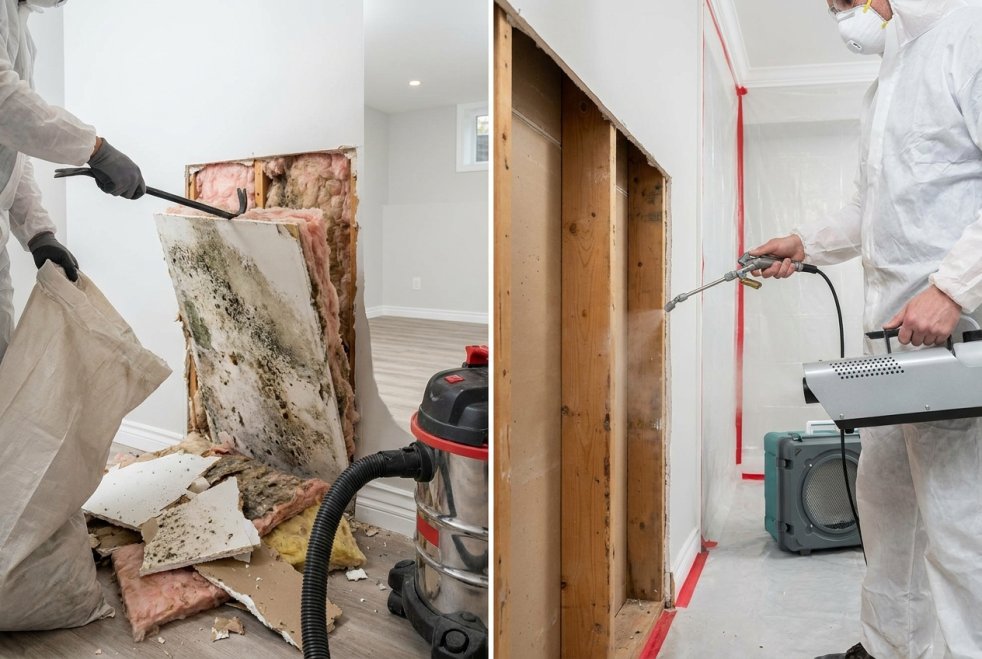
Mold remediation is the full process of identifying, containing, treating, and restoring areas affected by mold growth. The goal is not to eliminate every spore (which is impossible) but to bring mold levels back to a normal, safe range.
A proper remediation process typically includes:
- Inspection and moisture source identification
- Containment to prevent spores from spreading
- Air filtration using HEPA equipment
- Safe removal and disposal of mold-affected materials
- Cleaning and antimicrobial treatment of surfaces
- Drying and dehumidification to prevent regrowth
- Post-remediation testing to confirm safe levels
Remediation treats the root cause, not just the visible symptom. That's a critical difference.
Why This Matters for Grove City Homeowners
Grove City and the greater Columbus area experience humid summers, frequent rain, and cold winters with freeze-thaw cycles. These conditions create the perfect environment for moisture intrusion in basements, crawl spaces, and around windows.
When water damage goes unaddressed, even briefly, mold can begin growing within 24 to 48 hours. Ohio homes with older construction are especially vulnerable, since aging materials absorb moisture more readily.
Simply wiping away visible mold without addressing the underlying moisture problem is like mopping the floor while the faucet is still running. The mold will return.
Warning Signs You May Have a Mold Problem
Mold is not always visible. Watch for these signs in your home or commercial property:
- A persistent musty or earthy smell in certain rooms
- Discoloration on walls, ceilings, or grout lines
- Warped drywall, bubbling paint, or soft spots in flooring
- Increased allergy symptoms or respiratory irritation indoors
- Recent water damage, flooding, or a plumbing leak that was not fully dried
If you notice any of these signs, do not ignore them. Mold spreads quickly and can affect structural materials and air quality throughout your property.
Health and Structural Risks of Untreated Mold
Mold is more than an eyesore. Certain mold types, including Stachybotrys (often called black mold), can produce mycotoxins that affect respiratory health, especially in children, the elderly, and anyone with allergies or asthma.
On the structural side, mold feeds on organic materials like wood framing, drywall, and insulation. Left untreated, it can compromise the integrity of walls, floors, and ceilings, turning a manageable problem into a major renovation.
What to Do If You Suspect Mold
Here are the steps you should take right away:
- Do not disturb the mold or attempt to scrub it yourself, as this can spread spores
- Fix any active leaks or moisture sources if you can do so safely
- Improve ventilation in the affected area
- Contact a certified mold remediation professional for an inspection
Avoid using bleach on porous surfaces like drywall or wood. Bleach kills surface mold but does not penetrate deep enough to address the root growth, and it does nothing to fix the moisture problem.
How Quick 2 Dry LLC Handles Mold Remediation
At Quick 2 Dry LLC, we follow industry-standard protocols to assess and remediate mold safely and thoroughly. We identify the moisture source first, contain the affected area, and use professional-grade equipment to restore your property to a healthy condition.
We serve homeowners and businesses throughout Grove City and the surrounding Columbus area. Whether you're dealing with mold after a basement flood, a slow roof leak, or a burst pipe, our team responds quickly to get your property back to normal.
Get a Professional Assessment Today
Do not let mold sit and spread while you weigh your options. The longer it goes untreated, the more damage it causes and the more expensive the fix becomes.
Call Quick 2 Dry LLC today at (740) 729-8491 to schedule a mold inspection or mold remediation service. Our certified technicians are ready to help you protect your home, your health, and your investment.