

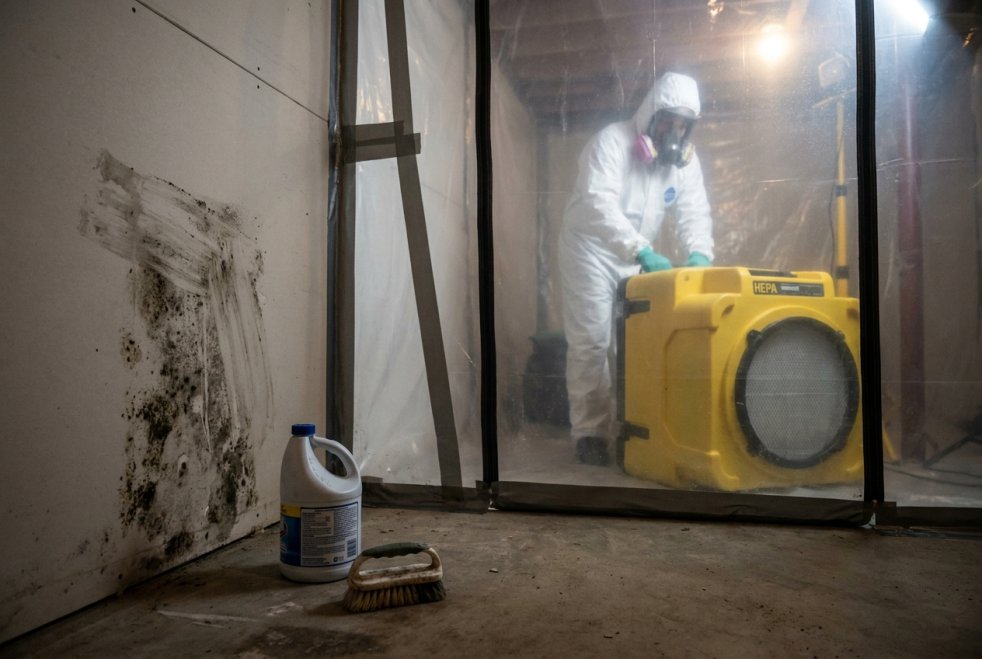
Why Mold Remediation Requires More Than Just Bleach and Scrubbing
It happens all the time. A homeowner spots mold on a basement wall, grabs a bottle of bleach, scrubs it away, and considers the problem solved. A few weeks later, the mold is back, often worse than before. In Grove City, OH, where humid summers and wet springs create ideal conditions for mold growth, this cycle plays out in homes and businesses more often than most people realize.
The truth is, bleach and a scrub brush are not mold remediation. Here is why that matters, and what real remediation actually looks like.
Why Bleach Falls Short
Bleach is a surface disinfectant. On porous materials like drywall, wood framing, and concrete block, it cannot penetrate deep enough to kill mold at the root. The water content in bleach solution can actually add moisture to porous surfaces, which feeds mold growth rather than stopping it.
Scrubbing makes things worse in a different way. Disturbing mold colonies without proper containment releases thousands of spores into the air. Those spores settle in new areas and start new colonies within 24 to 48 hours under the right conditions.
How Mold Actually Grows in Central Ohio Homes
Grove City sits in a region with average summer humidity levels that regularly exceed 70 percent. Combine that with older housing stock, finished basements, and the heavy rainfall central Ohio sees each spring, and you have a recipe for persistent moisture problems.
Mold does not need much to get started. It only requires:
- A moisture source (a slow leak, condensation, or flood residue)
- An organic material to feed on (drywall paper, wood, carpet padding)
- Temperatures between 40 and 100 degrees Fahrenheit
Most Ohio homes check all three boxes for several months out of the year. That is why water damage that is not dried completely within 48 to 72 hours almost always leads to mold.
Warning Signs You Have a Mold Problem
Mold is not always visible. By the time you see it, the colony is often well established behind walls or under flooring. Watch for these signs:
- A persistent musty odor in a room, closet, or basement
- Discoloration on walls, ceilings, or grout lines
- Warping, bubbling, or soft spots in drywall
- Unexplained allergy symptoms that improve when you leave the building
- A history of water intrusion, even if it seemed minor at the time
If you have had any water damage event in the past year, mold inspection should be part of your follow-up, not an afterthought.
What Professional Mold Remediation Actually Involves
Certified mold remediation follows a structured process designed to eliminate the source, contain the spread, and restore safe air quality. It is not a single step. It is a sequence of coordinated actions.
A proper remediation typically includes:
- Moisture mapping and inspection to find all affected areas, including hidden ones
- Containment barriers and negative air pressure to prevent spore migration
- HEPA filtration to capture airborne spores during removal
- Physical removal of contaminated materials that cannot be salvaged
- Application of EPA-registered antimicrobial treatments to affected surfaces
- Structural drying to eliminate the moisture source that allowed mold to grow
- Post-remediation verification to confirm clearance before reconstruction
Skipping any of these steps increases the chance of recurrence. That is why a DIY approach rarely solves the problem long-term.
The Health Risks Are Real
Mold exposure is not just an inconvenience. Prolonged exposure to mold spores and mycotoxins can cause respiratory issues, chronic sinus problems, headaches, and worsened asthma symptoms. Children, elderly residents, and anyone with a compromised immune system are especially vulnerable.
In commercial settings, mold can also create liability concerns and force temporary closures if left unaddressed. Acting early is always less costly than addressing a full-scale contamination later.
What to Do If You Suspect Mold
Do not disturb the area or attempt to clean it yourself before a professional assessment. Here are the right steps to take:
- Identify and stop any active moisture source if possible
- Avoid running HVAC systems that could circulate spores through the building
- Keep people with respiratory conditions away from the affected area
- Contact a certified remediation company for an inspection
The sooner you call, the more material can be saved and the lower the overall remediation cost.
Get the Right Help From the Start
Quick 2 Dry LLC provides professional mold remediation for homeowners and businesses throughout Grove City and the surrounding Columbus area. Our team uses industry-standard containment, removal, and drying protocols to make sure mold is eliminated at the source, not just the surface.
Do not waste time on solutions that will not last. Call Quick 2 Dry LLC today at (740) 729-8491 to schedule an inspection and get a clear picture of what your property actually needs.